Likely cause. On electric storage, one of two elements has failed, or the thermostat is set low or faulty. On gas, it can be a partially blocked burner. It may also simply be an undersized tank for the household.
Usual fix. Element and thermostat replacement is a single-visit repair. If the tank is undersized, sizing is corrected at replacement rather than patched.
Water is scalding hot
Likely cause. A failed tempering valve. These valves have a limited service life and are the component that keeps bathroom outlets at a safe temperature.
Usual fix. Replace the tempering valve. This is a safety issue and should not be deferred, particularly in homes with children or elderly residents.
Water pooling under the tank
Likely cause. Either a valve or fitting leaking, or the cylinder itself corroding through. The PTR valve releasing a small amount of water during heating is normal; a constant drip is not.
Usual fix. Valve and pipework leaks are repaired. A leaking cylinder cannot be repaired and the system needs replacing.
Banging, rumbling or kettling noises
Likely cause. Sediment build-up on the tank floor, or scale on the element. Water heats beneath the sediment layer and thumps as steam escapes.
Usual fix. Flushing and element replacement helps on younger tanks. On an older system the noise usually signals the tank is nearing the end of its life.
Rusty or discoloured hot water
Likely cause. Internal corrosion, generally because the sacrificial anode is spent. Only affecting the hot tap confirms it is the system rather than the mains supply.
Usual fix. Anode replacement can extend life if caught early. If the water is heavily discoloured the cylinder is usually too far gone.
Pilot light keeps going out
Likely cause. A failing thermocouple, a dirty pilot assembly, a draught reaching the burner compartment, or a gas valve fault.
Usual fix. Clean or replace the thermocouple and pilot assembly. Repeat failures after that point to the gas control valve.
Electricity or gas bills climbing
Likely cause. A failed lower element making the upper element work continuously, heavy scale, poor insulation on an older tank, or a heat pump running on boost.
Usual fix. Diagnose the cause first. Where an ageing system is simply inefficient, a heat pump upgrade often pays for itself over time.
Continuous flow unit cycling cold
Likely cause. Known as "cold water sandwich" — usually caused by low flow rates, a clogged inlet filter, or an undersized unit for simultaneous outlets.
Usual fix. Clean the filter, verify flow and gas supply, and check the unit is correctly sized for the number of outlets in use.
What you can safely check yourself
Run the hot tap furthest from the tank for a minute and note whether it is cold, lukewarm or scalding — that alone narrows the fault considerably.
Check the ground under and behind the unit for damp, and look at the relief valve drain line.
Note any error code on a continuous flow or heat pump controller before switching anything off.
Check whether the problem affects the cold tap too — if it does, it is a supply issue rather than the hot water system.
Where to stop
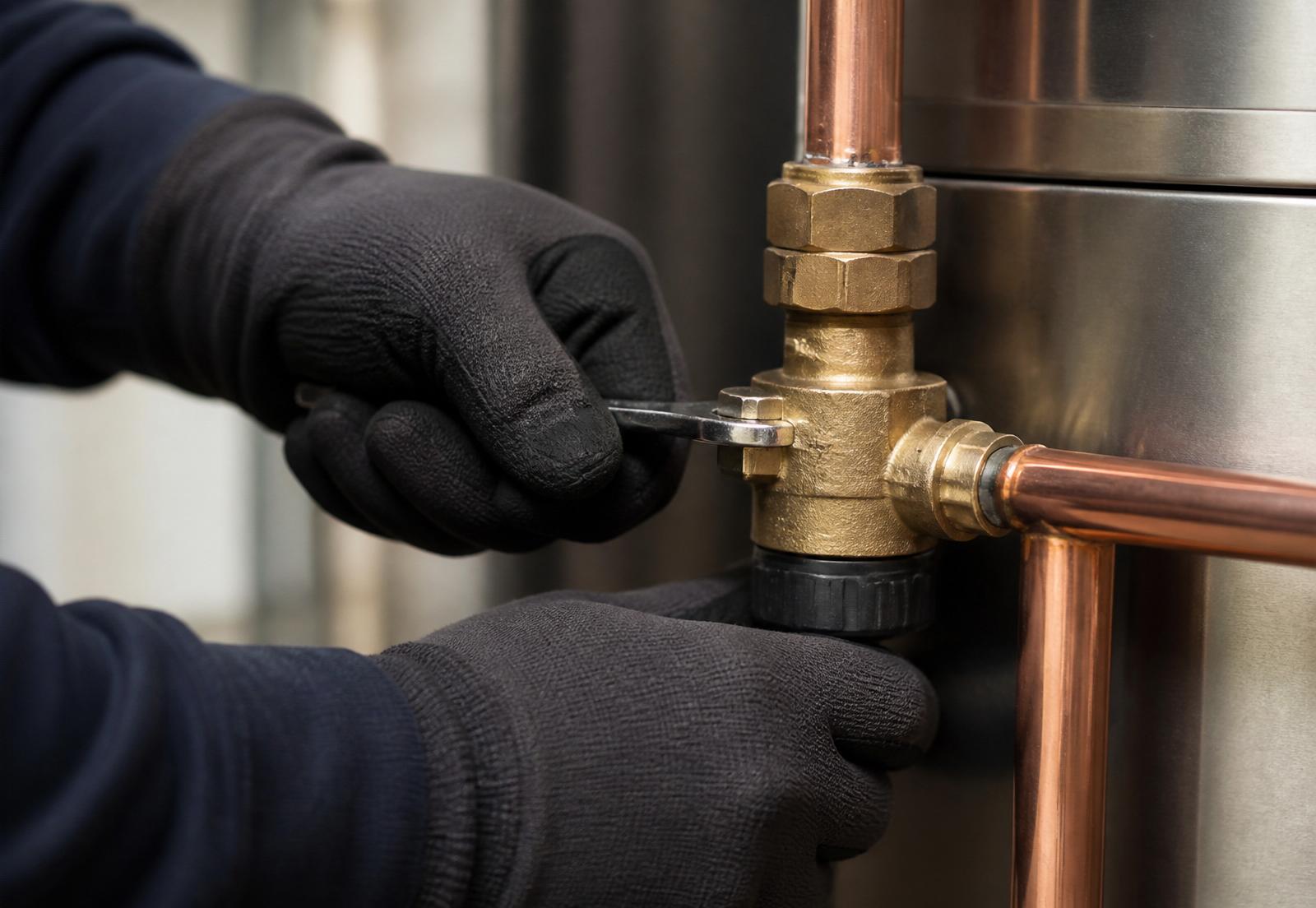
Opening a thermostat cover, testing an element, touching gas components or working on a heat pump's sealed circuit is licensed work in Tasmania and genuinely dangerous to attempt. So is replacing a PTR or tempering valve — both are safety devices under pressure.
What differs by system type
Electric storage
Elements, thermostats and the sacrificial anode account for most faults. Homes on a controlled off-peak tariff — still common in New Town, Moonah and Glenorchy — reheat overnight, so a failure is usually discovered the next morning.
Gas storage
Pilot outages, thermocouples and gas control valves dominate. Outdoor tanks on exposed Eastern Shore and coastal Kingston blocks lose pilots to wind more often than most people expect.
Continuous flow
Faults present as error codes rather than symptoms. Low flow through a clogged inlet filter is the most common underlying cause, and winter frost damage is a real risk if the unit is left unpowered.
Heat pumps
Restricted airflow and quiet fallback to the boost element are the two to watch — the second shows up on your power bill rather than in your shower.
A small discharge during the heating cycle is normal and expected. A constant drip is not — it usually means the valve has failed or the mains pressure is too high, and it wastes a surprising amount of water.
How often should a hot water system be serviced?
+
Storage tanks benefit from an anode and PTR valve check every few years. Some continuous flow and heat pump warranties require annual servicing, so check the manufacturer's conditions for your model.
Does hard water affect hot water systems in Hobart?
+
Southern Tasmanian water is relatively soft compared with much of mainland Australia, so scale is less aggressive here — but sediment still builds up in storage tanks over years of use.
How long should a hot water system last?
+
In Tasmanian conditions, electric and gas storage tanks commonly reach 8–12 years, stainless cylinders longer, continuous flow units 15–20 years and heat pumps around 10–15. Anode and relief valve maintenance is the single biggest influence on how far a storage tank gets.
What can I safely check myself?
+
Power at the switchboard, gas supply, error codes, damp ground under the tank, and whether isolation valves are open. Everything internal — elements, thermostats, gas components, relief and tempering valves, heat pump refrigerant circuits — is licensed work in Tasmania.
If the checks above haven't solved it, the fault is inside the system. We'll diagnose it on site, tell you exactly what has failed, and explain the options — repair or replacement — with a price before any work begins.